5 hours ago
28
5 hours ago
28
In the past 72 hours, Donald Trump has dropped all pretense, torched a couple decades of American policy, and undermined 18 months of his own diplomacy. He lifted sanctions on the import of Russian diesel fuel, in violation of the letter and spirit of laws that he himself signed. He has threatened to stop sharing intelligence with Ukraine, unless Ukraine agrees not to target Russian refineries, thus demanding that Kyiv give up its most effective weapon while asking nothing from Russia in exchange. He has not criticized Russian attacks on Ukrainian power plants or factories, even those owned by American companies. He has offered no condolences for the recent deaths of Ukrainian children in Russian bombing raids.
He has lied repeatedly. He declared that Ukraine and Russia had agreed to an “energy cease-fire,” an announcement that surprised the Ukrainians and that in any case the Russians immediately broke, hitting a power plant in Kharkiv only hours later. He accused Ukraine of blocking negotiations, when in reality the Ukrainians have repeatedly proposed cease-fires and Russia has never agreed to a cease-fire or any meaningful negotiation at all.
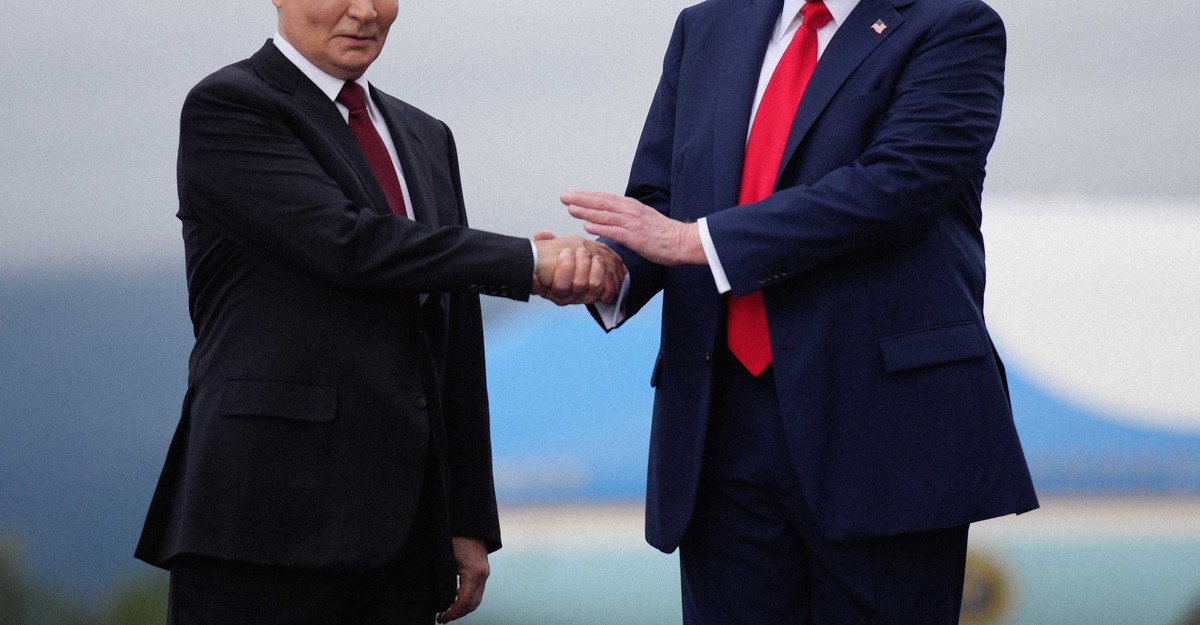
He has described Ukraine’s democratically elected president as an obstacle to negotiations and told him to leave office. But on Friday, before making these new decisions, he held yet another long, friendly telephone conversation with the Russian dictator, who really could end the war today. All Vladimir Putin has to do is tell his soldiers to stop fighting, and then the war is over. The Ukrainians cannot stop fighting because, if they do, their country will be conquered and they will suffer the fate of their occupied territories: leaders murdered, children kidnapped, repression and concentration camps for everyone else. If Trump knows this, then he does not care.
David Frum: Trump is an easy mark for Putin
The president has implied that the point of his new policy is to lower fuel prices for Americans. Perhaps he wants to convince voters that the cause of high prices is Ukraine and not his own war of choice in Iran. But this is not a sufficient explanation or justification for these dramatic actions. The amount of fuel that Russia could export is too small, the impact on pricing too slight, the narrative too late to shape electoral outcomes.
This looks, instead, like something very different: an abrupt, Hail Mary attempt to force Ukraine to surrender and to save the Russian economy, perhaps in order to finally complete the multiple business deals that the Russians are known to have discussed with American negotiators and others in Trump’s orbit. These include deals involving the Nord Stream gas pipelines, mineral mining in the Arctic, the Russian assets frozen in European banks, and more.
Since the beginning of Trump’s second term, American allies in Europe and elsewhere have tried to explain to the president the significance of the war and the threat that Russia poses to peace and prosperity in Europe, in the Middle East, in Africa. Now it looks as if they have failed, and Trump has followed his oldest instincts to side with Putin. What lessons will they draw?
The first and most obvious is: Don’t rely on the United States. America is now a capricious, unpredictable power, one whose long-standing foreign policies can be impulsively reversed, from one day to the next. The U.S. has been sanctioning Russia for many years, and now suddenly, at the whim of the president, it is not. Also: Dictators receive better treatment in Trump’s Washington than elected leaders. Canada is a far more reliable energy partner for the U.S. than Russia, and yet Trump has not sought to improve relations with the Canadian government. European security will be directly at risk in the case of a Ukrainian collapse or surrender, and yet Trump listens to Moscow, not Berlin or London.
Another lesson: This administration is for sale. A few days ago, The New York Times reported that, as part of peace negotiations between the U.S. and Russia, the property of Lukoil, a Russian company, may soon be acquired by a business consortium that includes Middle Eastern partners of Trump’s two lead negotiators in Ukraine, Jared Kushner and Steve Witkoff, as well as Trump’s daughter Ivanka and Witkoff’s son. (An administration official confirmed to the Times that Kushner and Witkoff were involved in the Lukoil discussions, though there is no evidence that they will personally benefit.) The proposed deals on pipelines, minerals, and frozen assets are also still on the table. Even if none of them is ever completed, the mere fact that Trump’s negotiators discuss them gives the Russian regime reason to believe that it can continue the war with impunity.
Read: Trump’s latest appeal to Russia could outrage even his allies
However, democracies can cooperate without the American president. Ukraine will continue fighting, and will probably continue striking Russian refineries, thanks to its friends in Europe and beyond. French intelligence, German weaponry, and broad packages of aid from Scandinavia, Poland, and elsewhere will help. Everyone else should take note. For the past couple years, Europeans, Canadians, and the Pacific democracies have been building deeper commercial and security links with one another, as well as with India and Latin America. They’ve just been given another reason to make those links stronger.
The Trump-Russia relationship remains intense, important, and very weird. In the end, Trump always adopts Russia’s perspective, whoever the leader. Since his first trip to Moscow in 1987, when it was still the Soviet Union, he has loudly repeated Russian propaganda and reflected Russian views. Upon returning from that trip, he took out full-page advertisements in three newspapers, attacking American alliances in Europe and Asia. For nearly 40 years, he has been saying much the same thing. He has changed his mind about abortion and crypto, he has supported different political parties at different times, but his dislike of America’s democratic allies and his preference for Russia has remained remarkably consistent.
He continues to hold these views in defiance of the American military and American intelligence, as well as majorities in the country and in Congress. Immediately after his statement on diesel and his comments about Volodymyr Zelensky, a bipartisan cohort of U.S. representatives and senators attacked the deal and vowed to reverse it. Earlier today, U.S. Air Force General Alexus Grynkewich, America’s highest-ranking soldier in Europe and the top NATO commander—a job always held by an American—delivered a very different message to Russia. Speaking at a security conference in Warsaw, Grynkewich said that any attack on NATO, something many now genuinely fear, would be met with overwhelming force: “We will stop the attack and deny them the ability to achieve their objectives, whatever those might be. We will, in short, ensure any attack, against any ally, proves utterly futile.” He implied that there would be massive retaliation targeting “anything and everything that supports, sustains, and controls” an aggressive force.
This is the kind of language that, if it also came from the White House, might deter Russia from expanding its current campaign of sabotage and cyberattacks in Europe, from continuing to aid Iran, or from committing war crimes in Ukraine. But this president absolutely refuses to use it, and at this point, we have to assume he never will.