2 hours ago
15
2 hours ago
15
It rained most of Sunday in Washington, as the remnants of Hurricane Isaias washed over the East Coast. Unable to golf, and stuck inside the White House, President Trump spent part of his morning on social media touting the size of his rallies and defending Christopher Columbus. He also declared that Russia and Ukraine had agreed to halt strikes against each other’s energy infrastructures. Except that he hadn’t first confirmed that with Ukrainian President Volodymyr Zelensky—and Russia spent the hours that followed bombarding Ukraine with missiles and drones, hitting a Kharkiv power plant.
Trump’s inability to bring the Iran war to a close has left him incensed but also oddly paralyzed, two people close to him told us. One of them, an adviser, said that Trump “is used to snapping his fingers and having the whole world—Republicans, world leaders, the media—come to attention, and he is losing his mind that Iran won’t listen.” Iran has resumed menacing oil tankers in the Strait of Hormuz, and the average price of diesel in the United States has crossed the $6-a-gallon mark, raising the cost of goods that travel the nation’s highways on trucks.
Republicans are panicked that those high energy prices could help Democrats take control of the House and Senate in the midterm elections that are now only three weeks away. Trump has been searching for a scapegoat, and appears to have settled on Ukraine. Although blaming a European country that’s fighting for its existence for the rise in global oil prices might seem implausible, Trump seems to prefer that to accepting responsibility for his decision to attack Iran. His broadsides against Ukraine, moreover, are consistent with his decade-long deference to Vladimir Putin. With rare exceptions, Trump has aligned with Moscow over Kyiv throughout the four-and-a-half-year war. He wants Ukraine to end the fighting—and has pressured the country to agree to terms that Zelensky finds unacceptable.
A U.S. president siding with the Kremlin is quite an October surprise. But in just the past few days, Trump appears to have fully turned against Ukraine. He announced on Friday that he had reached an agreement with Putin to import Russian diesel fuel, undercutting the new sanctions bill against Moscow’s energy industry that Trump signed into law last month. Even if the roughly 2.25 million barrels headed to the U.S. only marginally ease fuel costs, the deal allows Trump to tout efforts to help Americans while also providing Russia with additional revenue. (Another few million barrels are set to ship next month.)
Despite the opposition of European allies and some Republicans on Capitol Hill, Trump has followed up by placing even more pressure on Ukraine. He called for Zelensky to be replaced. His aides have threatened to withhold arms sales unless Kyiv stops targeting Russian diesel plants. Some in Trump’s orbit have suggested that the U.S. go further, and stop sharing intelligence with Kyiv. That was the context in which Trump announced his fictional energy cease-fire. A senior Ukrainian military officer told us that Trump’s statements are “simply beyond comprehension.”
“Things are already incredibly difficult for us here,” the officer said, speaking, like others who talked with us, on the condition of anonymity to discuss sensitive matters. “But apparently, there’s always another level below rock bottom. Things can always get worse.”
Ukraine has expanded its strikes deep into Russian territory in recent months, targeting the larger nation’s oil refineries. Those attacks sparked an energy crisis in Russia and were cheered across Europe—but not in the White House. Russia imposed a ban on diesel exports in response, which added more pressure to global diesel markets already under strain from the war in Iran. Zelensky told Trump and his envoys Steve Witkoff and Jared Kushner that he was willing to stop attacking Russian oil refineries if the Russians halted attacks on Ukrainian power plants, a White House official told us. But Trump doesn’t see the strikes as equivalent—and demanded that Ukraine first stop attacking Russian refineries, the official said. Zelensky refused.
“Zelensky is overplaying his hand and pissing the president off,” the White House official said. “The president is asking for one thing: stop hitting the refineries. Give him that.”
Read: Trump’s latest appeal to Russia could outrage even his allies
Trump’s next move against Ukraine came, as it so often does, after a phone call with Putin. Zelensky’s aides have expressed frustration that Putin has swayed Trump at crucial junctures in the conflict (once, even, while Zelensky was flying to Washington to meet with Trump in an effort to secure access to new U.S. weapons). This time, Trump spoke with Putin on Friday to wish him a belated birthday, even though some in the White House counseled against the call, one of the outside advisers told us, believing it would yield little. During the 90-minute conversation, Trump told Putin that he would lift the sanctions on Russian diesel exports. (Some in Kyiv believe that the deal was agreed to earlier, because a ship carrying Russian oil and gas is already approaching the U.S.)
That undermined sanctions applied in 2022 and undercut the tougher Russian-sanctions bill that Trump signed last month; the law was named in honor of one of its champions, the late Senator Lindsey Graham. A bipartisan group of lawmakers was infuriated by the move, and some Republicans denounced Trump for siding with Putin. Four GOP senators—Lisa Murkowski of Alaska, Susan Collins of Maine, Thom Tillis of North Carolina, and John Curtis of Utah—joined some of their Democratic colleagues to release a statement yesterday saying that lifting the sanctions “runs directly counter to that law” and that the U.S. should not provide “Putin with a financial lifeline while Russia continues to kill Ukrainian civilians.”
Zelensky, who was blindsided by the diesel deal, deemed it “not fair and not honest.” He had spent more than a year trying to repair his relationship with Trump, which hit its nadir in February 2025 during a shouting match in the Oval Office. Since then, Zelensky has taken to flattering the U.S. president, and he has tried to capitalize on Trump’s occasional annoyance that Putin will not end the war. Trump and Putin’s Alaska summit last year yielded little more than a photo of the two that hangs in the Palm Room at the White House. Even if Trump wouldn’t fully support Ukraine, officials in Kyiv had hoped he would not actively hurt their cause. That hope may be fading.
Recent talks between Kushner, Witkoff, and Putin have included the promise of massive business deals that Russia could strike with U.S. interests once the war concludes, according to reports. Ukrainian officials have long believed that Trump’s foreign policy focuses on opening up business deals—and the potential enrichment of the president’s family and friends—over the defense of democracy, human rights, or territorial sovereignty. Some officials in Kyiv believe that Russia’s economy, which has been remade to fuel Putin’s war machine, will not implode, despite the pressure of increased drone strikes and sanctions. A Ukrainian official close to the negotiating process told us that means “we need to change our strategy, stop fooling ourselves” and find a way out of the war with Europe’s help. That, the official said, would likely require a new emphasis on negotiations.
During his call with Trump, Putin declined to commit to resuming peace talks, the Kremlin later told reporters. Yet Trump continues to view Zelensky as the primary impediment to peace—and the business deals it might bring—and he called for Ukraine to hold elections to select a new president. (Zelensky has said he will hold an election if Putin agrees to a 60-day cease-fire.) Trump also views Zelensky as an obstacle to his coveted, yet elusive, Nobel Peace Prize, for which he was passed over again last week. A senior European official told us that the U.S. has threatened to stop selling weapons to Ukraine via Europe if the strikes continue, and some close to Trump have suggested that the U.S. stop sharing intelligence with Ukraine, as it briefly did after the 2025 Oval Office argument.
From the November 2026 issue: The Baltic states prepare for war
Ukraine was already bracing for a difficult winter. Moscow has escalated its attacks on Ukraine’s cities. It has grown its missile stockpiles and debuted a jet-powered drone that Ukrainian defenses have had difficulty stopping. Europe has tried to fill the gaps left by Trump’s indifference—and the U.S. being bogged down in Iran—but Zelensky’s aides believe that Putin will use the winter to pummel their cities before making another lunge at Kyiv in the spring. If, suddenly, Ukraine were left without U.S. intelligence or American-made weapons, Kyiv might be in its most vulnerable position since the first days of the war.
Trump’s admiration for Putin has been one of the most enduring geopolitical subplots of the past decade. He refused to publicly acknowledge Russia’s efforts to help elect him in 2016, infamously siding with Putin over U.S. intelligence agencies during the leaders’ summit in Helsinki during his first term. More recently, he has refrained from holding Putin to account for helping Iran, even after American intelligence agencies revealed that Moscow gave Tehran targeting information to strike U.S. military assets in the region. Some of Trump’s closest outside advisers have privately wondered what Putin has done to so thoroughly enthrall the president; Trump’s respect for the Russian leader appears undiminished despite the humiliating struggles Putin has faced during the Ukraine invasion.
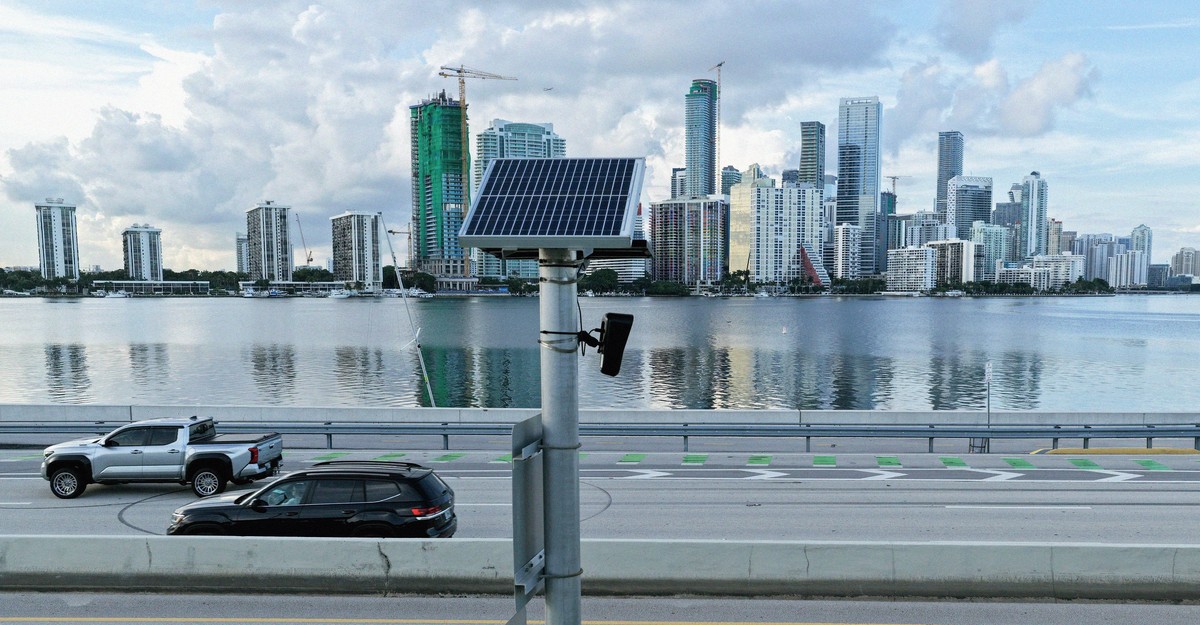
Instead, Trump has taken steps to help Putin shed his status as an international pariah. Though Putin has been charged with war crimes by the International Criminal Court, Trump welcomed him to Anchorage last summer. Trump’s move to undo the diesel sanctions could provide a boost to Russia’s faltering economy. And he has overruled the objections of some in his own party by inviting Putin to this winter’s G20 summit, which the United States is hosting at a Trump-owned golf course in Doral, just outside Miami.
If Putin accepts the invitation to that December meeting, it would be the first time he has attended a multilateral summit in a Western country since his invasion of Ukraine. Zelensky has said he’ll be there, and is hoping to meet with Putin to negotiate the end of the war. Trump has mentioned to advisers, one of them told us, that he’d like both sides to arrive to Doral ready to make a deal, so he can then preside over a peacemaking summit. Maybe then, Trump has suggested, he can finally win that Nobel.