 5 days ago
43
5 days ago
43
Satellite observations from the National Aeronautics and Space Administration (NASA) are showing early signs that El Niño is already altering marine conditions in the Pacific, raising questions about how the climate pattern could affect fish populations and fisheries along the West Coast and beyond.
El Niño is a naturally recurring climate phenomenon marked by warmer-than-normal waters in parts of the equatorial Pacific, along with shifts in atmospheric and ocean circulation. The National Oceanic and Atmospheric Administration's (NOAA) Climate Prediction Center has said there is a greater than 90 percent chance of a very strong El Niño into 2027 and a 69 percent chance of a historic event exceeding the strength of previous El Niño events dating back to 1950.
NASA said satellites have already been detecting warmer sea surface temperatures, higher sea surface height, and changes in chlorophyll-a, a pigment used as an indicator of phytoplankton abundance.
Early Changes in the Pacific
Phytoplankton are microscopic organisms at the base of the marine food web. NASA’s PACE satellite observed substantially lower chlorophyll concentrations in parts of the central equatorial Pacific in June 2026 compared with neutral conditions in June 2025. NASA scientists said that pattern is expected during El Niño, when weakened trade winds and deeper warm surface waters suppress the upwelling of cool, nutrient-rich water that normally supports phytoplankton growth.
Those changes matter because phytoplankton help support zooplankton, fish, seabirds and marine mammals. However, experts cautioned that satellite images of surface chlorophyll are only one part of the picture.
NOAA research oceanographer Andrew Leising told Newsweek reduced phytoplankton “definitely can ripple through the ecosystem.”
“Phytoplankton is the bottom of the food web and therefore supplies energy to basically everything else either directly, or indirectly through intermediate herbivores and predators,” he said.
Why Warmer Water Can Mean Less Food
Leising said warm waters, whether along the equator or near the West Coast, typically inhibit upwelling, the process that brings cold, nutrient-rich water up from depth.
“That cold, nutrient-rich water is what fuels the growth of the phytoplankton, and in turn fuels the entire ecosystem,” he said.
Michael Jacox, a research oceanographer at NOAA’s Southwest Fisheries Science Center, said the tropical Pacific is “obviously the center of action,” but the eastern Pacific beyond the tropics, including the west coasts of North and South America, is also likely to be strongly affected.
Jacox said those regions are sensitive to El Niño because of “teleconnections” from the tropics, through the ocean and atmosphere.
“Along the US West Coast, the tendency is for El Niño to limit productivity by reducing the availability of nutrients in the surface ocean,” he said.
Jacox added this can happen in several ways: coastal upwelling can weaken, surface warming can increase ocean stratification and make it harder to lift nutrients from depth, and the nutricline, the depth at which high nutrients are available, can become deeper.
Which Fisheries Could Be Affected?
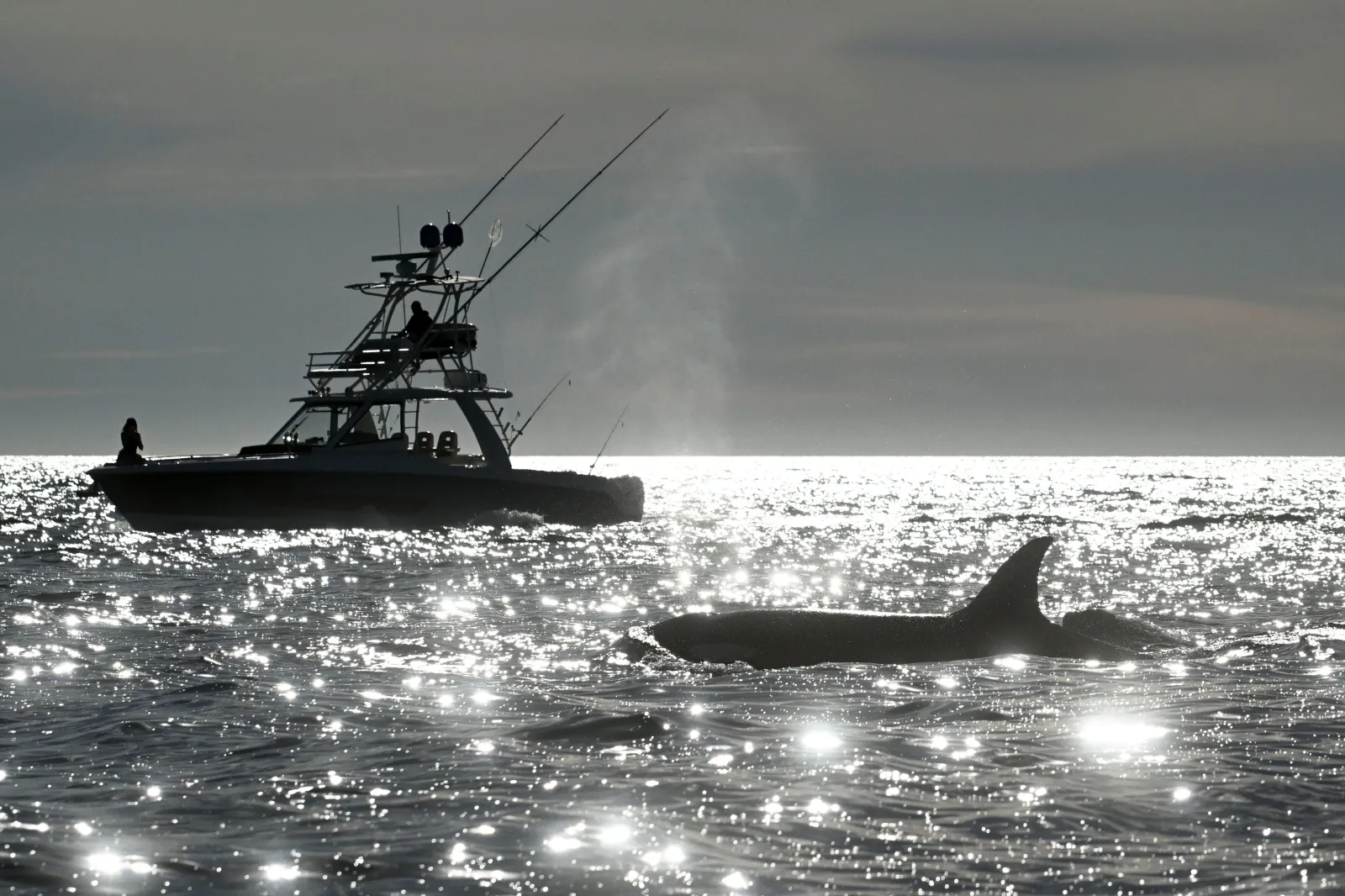
Leising said the areas most affected would likely include eastern equatorial Pacific regions near the coast where fisheries operate. Along the U.S. West Coast, he said impacts would depend on the species.
“Cold water species may move north or to deeper waters, and will generally have lower growth and reproduction,” Leising said.
But the effects are not uniformly negative for all species or fishing opportunities. Leising said some warm-water species, including tunas, may be found closer to shore and farther north during such conditions.
That “can actually make for more fishing opportunities on these species than normal years,” he said.
Strength Raises the Odds, Not Certainty
Jacox cautioned that El Niño does not guarantee particular impacts.
“The presence of El Niño doesn't offer any guarantees in terms of impacts,” he said. “What it does do is shift the odds so that warm, low productivity conditions are more likely. The stronger El Niño is, the more those odds shift, and the more likely we are to see severe impacts.”
Leising also warned against reading too much into surface chlorophyll alone. Satellites generally only see the top few meters of the ocean, he said, while much of the phytoplankton can be deeper. Surface chlorophyll is often correlated with chlorophyll in the upper water column, but not always.
He added that equatorial chlorophyll levels are normally low compared with coastal regions, meaning small changes can appear large in relative terms. A single chlorophyll image also shows what is present at a given moment, not necessarily how much biological production is occurring over time.
Contact Newsweek editors for this story: Matthew Robinson and Anthony Murray.